Let’s be honest: summer brings the sunshine, but it also brings that dreaded monthly envelope—the electricity bill. I still remember last year when my bill tripled in a single month; I was in total shock. That was the moment I decided to stop complaining and start experimenting with how my family uses energy.
The results were incredible. By making small, intentional changes, I managed to cut our costs significantly without sacrificing our comfort. Today, I’m sharing my 15 “battle-tested” hacks. These aren’t just dry theories; they are practical steps you can start taking today to keep your home cool and your wallet full.
I. Optimizing the “Budget Killer”: Air Conditioning (AC)
The AC usually accounts for 60-70% of a household’s energy consumption in the summer. A few tweaks here can lead to massive savings.
1. The “Magic 26°C” Rule
Many people have a habit of cranking the AC down to 16°C (60°F) the moment they get home. In reality, this doesn’t cool the room faster; it just forces the compressor to work at an unsustainable rate. I keep mine at 26-27°C (79°F). This is the “sweet spot” where the body feels comfortable and the machine runs efficiently. Every degree you raise saves about 7-10% on energy.
2. The AC and Fan Power Duo
This is my favorite trick. When you turn on the AC, turn on a ceiling or floor fan at a low setting. The fan helps circulate the cool air much faster, allowing you to feel cool even if the thermostat is set higher. After about 30 minutes, once the room is chilled, you can turn the fan off.
3. Clean Your Filters Regularly
Did you know that a dusty filter can reduce cooling efficiency by up to 15%? Every two weeks, I spend five minutes popping the filters out and rinsing them with water. It’s a tiny task that makes the unit run quieter and blow much colder air.
4. Close the Curtains and Seal the Gaps
Don’t let that expensive cold air leak out. More importantly, use your curtains as an insulation shield. During peak sun hours (11 AM – 3 PM), I keep the blinds closed to block solar radiation from heating the room. This prevents the AC from having to “overwork” to maintain the temperature.
II. Managing the Fridge – The 24/7 Machine
Unlike the AC, your refrigerator never sleeps. Optimizing it is key to long-term savings.
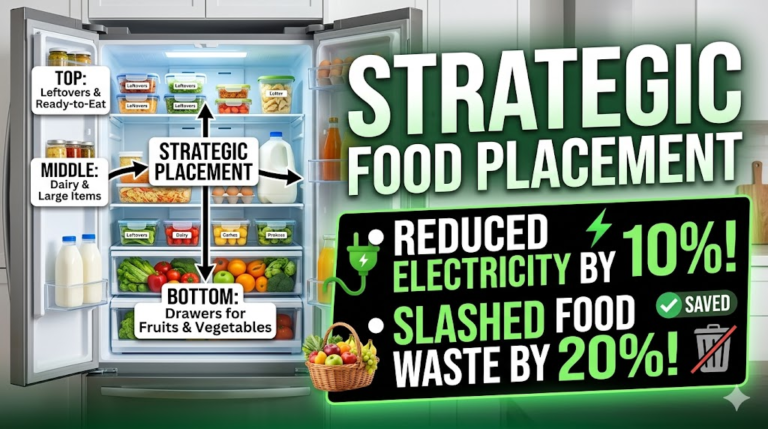
5. Don’t Let Your Fridge Go “Hungry” (But Don’t Overstuff It)
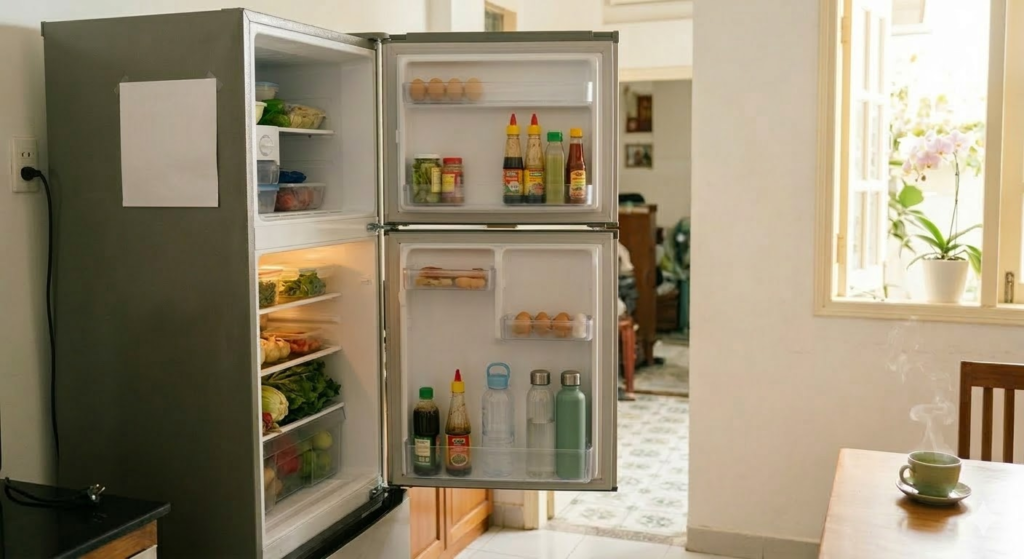
An empty fridge loses cold air every time you open the door. On the other hand, overstuffing it prevents cold air from circulating. I try to keep my fridge at about 70-80% capacity. If it’s too empty, I put a few bottles of water inside to help maintain the thermal mass.
6. The Paper Test for Door Seals
A fridge with a leaky seal is like a wallet with a hole in it. Try keping a piece of paper in the door and closing it. If the paper slides out easily, your seal is worn out. You can often fix this by using a hairdryer to warm the rubber until it expands and grips tightly again.
7. Stop “Window Shopping” with the Door Open
Every time the door opens, the cold air falls out, and the motor has to work overtime to cool back down. I’ve trained myself to decide exactly what I need before I pull the handle.
III. Changing Habits with Other Household Appliances
8. Kill the “Phantom” Power (Standby Mode)
Did you know that electronics like TVs and game consoles still draw power when they are “off” but plugged in? I installed power strips with individual switches for my entertainment center. One flick of a switch at night ensures zero energy wastage.
9. Wash Clothes in Cold Water
About 90% of a washing machine’s energy goes toward heating the water. For standard daily loads, I always select the cold water setting. It’s gentler on the fabric, prevents shrinking, and saves a surprising amount of electricity over a month.
10. Harness Natural Light
Summer days are long. Instead of turning on the lights, I open the windows early in the morning to let in the breeze and natural light. It makes the house feel more vibrant and costs zero dollars.
11. Switch to LED Bulbs
If you are still using old incandescent or fluorescent bulbs, switch them to LEDs immediately. LEDs emit almost no heat (keeping your room cooler) and use 80% less energy while lasting years longer.
IV. The “Little Things” That Add Up
12. Be Smart with the Electric Kettle
Only boil the amount of water you actually need. Boiling a full liter for one cup of tea is a waste of energy. Also, keep the heating element free of limescale to ensure heat transfers efficiently.
13. Batch Your Ironing
Irons consume a huge amount of power to heat up. I gather a week’s worth of clothes and iron them all at once. When I’m almost finished, I unplug the iron and use the residual heat for thinner items like handkerchiefs or silk shirts.
14. Time Your Rice Cooking
The “Keep Warm” mode on rice cookers is a hidden energy drain if left on all day. I try to start the cooker only about 45 minutes before dinner so it doesn’t sit on standby for hours.
15. Plant Some Greenery
This is the most sustainable solution. Plants on a balcony or near windows act as natural insulation and air filters. A home surrounded by greenery is usually 2-3°C cooler than a “concrete box.”
Final Thoughts: Saving Energy is a Lifestyle
Saving electricity doesn’t mean living in the dark or suffering in the heat. It’s about understanding your appliances and tweaking your habits.
When you start paying attention to every kilowatt-hour, you aren’t just protecting your own pocket—you’re reducing the load on the national grid and helping the environment. Try implementing just three of these hacks today. I bet you’ll be smiling when you open next month’s bill!