For years, I treated my home office like a temporary workspace—a kitchen chair, a cluttered desk, and whatever lighting was available. I thought “Biohacking” was only for Silicon Valley billionaires or professional athletes. I was wrong. Biohacking is simply the art and science of changing your environment to take control of your biology.
After months of feeling drained by 3 PM and struggling with persistent brain fog, I realized that my office wasn’t just a place where I worked; it was a biological system that was either helping me or hurting me. By making small, evidence-based changes, I transformed my productivity. Here is how I biohacked my home office, and how you can do the same.
1. The Lighting Hack: Syncing with My Circadian Rhythm
The biggest mistake I made was relying on standard overhead LED lights. Our bodies are hardwired to respond to the sun’s natural light cycle.
My Experience: I noticed that working under harsh “cool white” light late into the evening was wrecking my sleep. My brain thought it was midday when it was actually 9 PM.
The Hack:
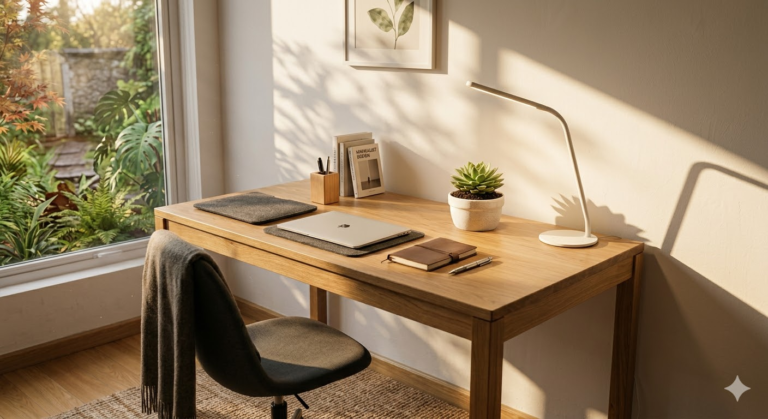
Morning: I moved my desk to face a window. Natural morning light (blue light from the sun) suppresses melatonin and spikes cortisol, which is exactly what you need to wake up.
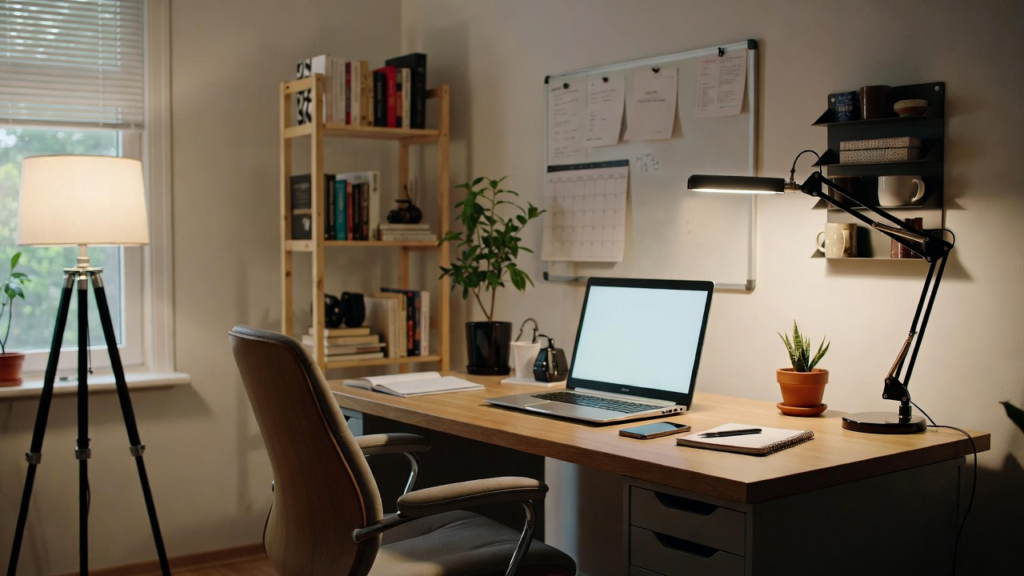
Afternoon: I invested in a smart bulb that transitions to “warm orange” tones after 4 PM.
The Result: My sleep quality improved within a week, and I stopped feeling that “artificial exhaustion” at the end of the day.
2. Oxygen and Aeration: The “Carbon Dioxide” Trap
I used to work with my office door and windows tightly shut for “focus.” Little did I know, I was trapped in a CO2 bubble. High levels of carbon dioxide in small rooms can reduce cognitive function by up to 50%.
My Experience: I would often get headaches around 2 PM. I thought it was dehydration, but it was actually a lack of fresh air.
The Hack:
The 2-Hour Purge: Every two hours, I open the window for 5 minutes, regardless of the weather.
The Snake Plant: I added a Snake Plant (Sansevieria) to my desk. Unlike most plants, it releases oxygen at night and is excellent at filtering indoor toxins.
The Result: The mid-afternoon headaches vanished. Fresh air is the cheapest cognitive enhancer you will ever find.
3. The Sensory Hack: Soundscapes vs. Silence
Total silence used to make me anxious, but lyrics in music were too distracting.
My Experience: I discovered that my brain enters a “Flow State” much faster when exposed to specific frequencies.
The Hack:
Brown Noise: While many like White Noise, I found Brown Noise (deeper, like a low roar or distant thunder) much better for masking household distractions without being piercing.
Binaural Beats: On days when I need intense focus, I use 40Hz binaural beats. Science suggests this frequency helps with focus and memory.
The Result: I can now work in a busy house without feeling the urge to check my phone every five minutes.
4. Temperature Control: The “Cool” Focus
Most people keep their home offices too warm. Our brains actually work better in slightly cooler environments (around 20-22°C).
My Experience: I realized that whenever I turned the heater up, I started feeling sluggish and sleepy. A warm room is for relaxing, not for producing.
The Hack:
I started keeping my office about 2 degrees cooler than the rest of the house.
If I feel a bit cold, I drink hot green tea instead of turning up the heat. This keeps my metabolism active and my mind sharp.
5. Movement Micro-Dosing (The Orhpositivo Way)
As a follow-up to my previous research on the sedentary lifestyle, I integrated “movement snacks” directly into my office setup.
My Experience: I realized I couldn’t trust myself to “remember” to move. I needed a physical trigger.
The Hack:
The Standing Trigger: I set a timer for 45 minutes. When it dings, I must stand up and do 10 air squats. No excuses.
The Visual Cue: I kept a small pair of light dumbbells right next to my coffee mug. It sounds silly, but the visual reminder makes me use them.
The Result: My legs feel “alive” at the end of the day, and the “Dead Butt Syndrome” I feared is no longer an issue.
Conclusion: Design Your Success
Biohacking your home office isn’t about expensive gadgets. It’s about being an architect of your own environment. When you align your workspace with your biology—light, air, sound, and movement—you stop fighting against yourself.
At Orhpositivo, we believe that true productivity is a byproduct of health. If you take care of your workspace, your workspace will take care of your work. Start with one change today: open a window or move your desk closer to the light. Your brain will thank you.
Disclaimer
This article is based on personal experience and general wellness research. Biohacking tips are intended for lifestyle improvement and should not replace professional ergonomic or medical advice.