In the hustle and bustle of modern city life, establishing a balcony vegetable garden has become more than just a trend; it’s a vital connection to nature and a source of pristine, organic food. But for most of us, “busy” is an understatement. The biggest hurdle isn’t the space; it’s the time. Don’t let a tight schedule stop you. This comprehensive guide shares the secrets to growing a thriving, low-maintenance balcony garden that fits into your life, with minimal daily care.
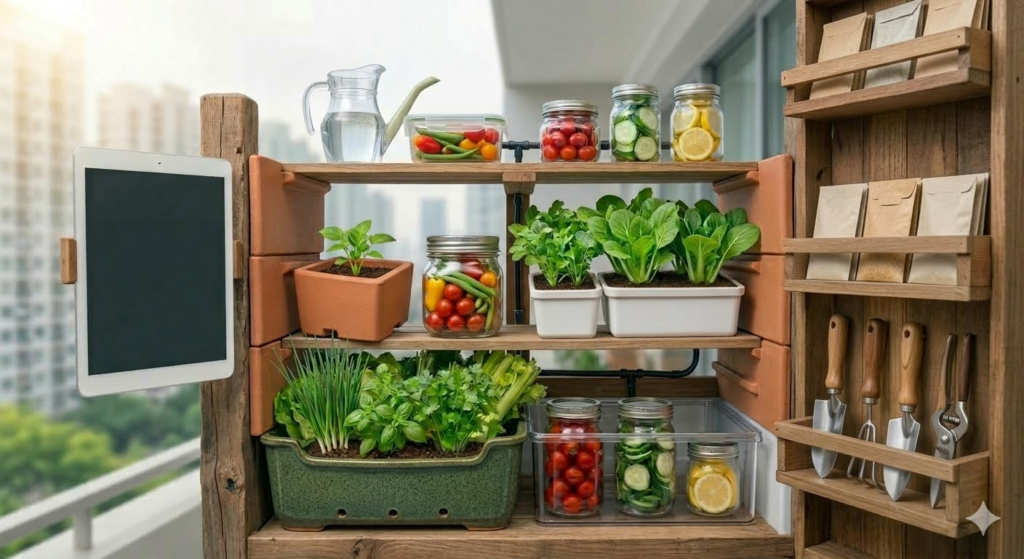
1. Why Should a Busy Professional Garden?
Before we dive into the “how,” let’s remind ourselves of the “why.” A small “micro-farm” on your balcony isn’t just a hobby; it’s a source of multiple benefits:
Ultimate Food Safety: You have total control over the soil, water, and fertilizers, ensuring your produce is chemical-free.
Cost-Effective Flavor: Herbs and small vegetables like spring onions are expensive in stores. Having them steps away means always having fresh flavor without waste.
Instant Stress Relief: Spending just a few minutes among green plants can significantly lower cortisol levels and provide mental balance after a long workday.
Green Oasis: It transforms a barren concrete corner into a beautiful, fresh-smelling retreat, perfect for morning coffee or evening unwinding.
2. Choosing “Set-and-Forget” Plants for Maximum Success
The most common mistake for new, busy gardeners is choosing demanding plants. For success with limited time, select varieties that are Resilient – Fast-Growing – and Drought-Tolerant.
Hard-to-Kill Herbs (Spring Onions, Mint, Basil)
This is your “immortal” plant group. Spring onions can be grown easily from store-bought bulbs or leftover root ends; in two weeks, you’ll be harvesting. Mint is so vigorous it can take over a pot with minimal water, and basil requires only regular watering to produce abundant, aromatic leaves. They are perfect “instant gratification” plants.
Fast and Easy Leafy Greens (Mustard Greens, Bok Choy, Kangkong)
These greens are incredibly fast from seed to harvest (25–30 days). A pro-tip for busy people: sow the seeds thickly and harvest them young as “microgreens.” They are more nutrient-dense and don’t require thinning. Kangkong (Water Spinach) is particularly resilient and loves the heat.
Resilient Lettuces
Many lettuce varieties thrive in partial shade, which is common on apartment balconies. Loose-leaf types are excellent because you can “cut-and-come-again,” harvesting individual outer leaves while the plant continues to grow, providing a steady supply.
3. The Power of Upcycling: Styrofoam Boxes as Low-Cost Planters
Forget expensive hydroponic systems or designer pots. The best, most sustainable choice for a balcony is the humble Styrofoam box. They are insulation masters, preventing the soil and plant roots from overheating on a sunny balcony, and they are virtually free or very cheap from local markets.
Preparing Your Styrofoam Box Planter:
Smart Drainage: Instead of poking holes in the bottom, which leads to messy water runoff on your balcony floor, punch several 1-inch (2.5 cm) holes along the lower side walls, about 2-3 inches (5-8 cm) up from the base. This creates a small water reservoir at the bottom, which helps keep the soil moist for longer if you miss a watering day.
Base Layer: Always place a layer of large pebbles, broken pot pieces, or coarse coco coir at the bottom to ensure the soil doesn’t compact and block your drainage holes.
4. The “Set It Once” Soil Mix Formula for Lazy Gardens
To ensure your plants have all the nutrition they need without you constantly adding fertilizer, you need a powerful, rich soil base. A foolproof formula for urban balcony gardening is:
50% Clean Topsoil or Compost: Providing the essential structure.
30% Vermicompost or Aged Manure: This is the nutrition powerhouse, releasing nutrients slowly and providing beneficial microbes. (Chicken manure is excellent, but ensure it is well-aged and odorless.)
20% Aeration Material: Use rice husks, coco coir, or perlite to keep the soil loose, airy, and to prevent waterlogging.
Lazy Gardener’s Tip: Stir in a spoonful of Trichoderma (a beneficial fungus) to create a protective barrier around roots, preventing rot and fungal diseases without the use of chemical fungicides.
5. A Low-Maintenance Care Schedule that Fits Your Busy Week
This is the most crucial section: how to keep your garden happy when you are time-poor.
Strategic Watering
Watering is the one daily task you can’t fully avoid, but you can make it smarter. Instead of light, frequent sprays, give your containers a very deep soaking in the cool morning before work. This encourages deep root growth. To make this last, mulch the soil surface with a layer of dried straw or coco coir. This single step can reduce water loss by over 50%. You can also create a simple DIY self-watering system by inverting a water bottle with tiny pinholes in the cap and burying the neck into the soil.
The Power of “Kitchen Gold”
Busy people produce “kitchen waste,” but for a gardener, this is gold.
Rice Water: Instead of dumping it, use the nutrient-rich water from washing rice to water your plants.
Banana Peels: Cut them up and bury them near the base of fruiting plants (like a single tomato or chili) for potassium boost.
Eggshells: Crushed and sprinkled on the soil, they provide a calcium slow-release and act as a natural, organic barrier against pests like snails.