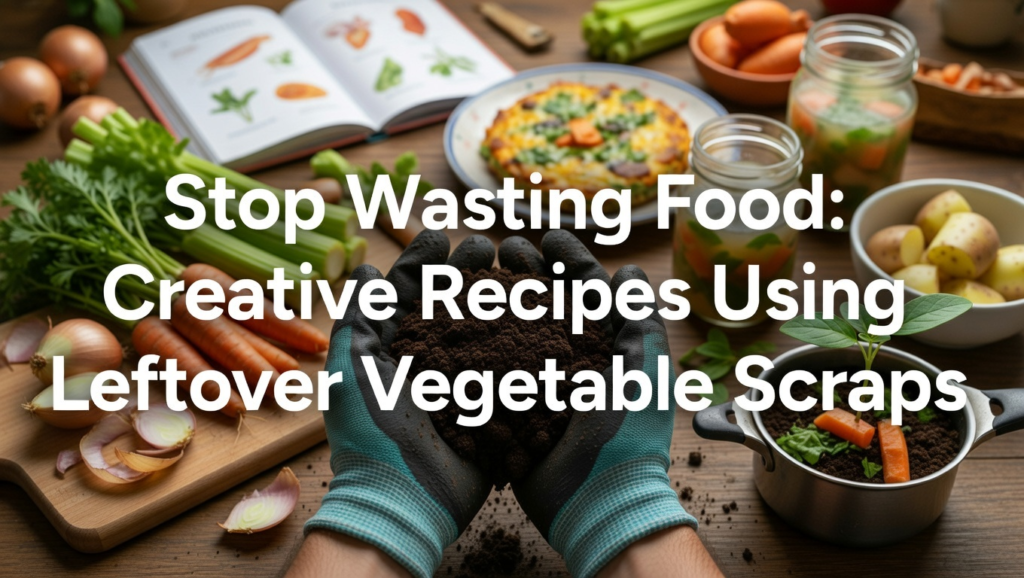
I still remember the sting of guilt I felt every Sunday night while taking out the trash. Nestled among the coffee grounds were onion skins, broccoli stalks, and bundles of herbs that had wilted before I even had a chance to use them. As someone obsessed with the Facts & Figures of household efficiency here at FactsFigure, I started to wonder: “How much money am I actually throwing into the bin every month?”
According to research by the NRDC, the average family wastes between $1,500 and $2,000 worth of food annually. When I conducted a small “audit” of my own kitchen, the numbers were staggering. Nearly 25% of the groceries I paid for ended up in the landfill. It wasn’t because they were rotten; it was because I—like many others—had been taught that these parts were “trash.”
Over the last 90 days, I embarked on a personal revolution: Turning waste into wealth. The result wasn’t just a savings account that grew by $100 every month; it was an entirely new culinary mindset. Here is my journey and the “survival” recipes that changed everything.
The Breakthrough: My $0 “Liquid Gold” Stock
The biggest shift started with a simple silicone freezer bag. In the past, I would toss onion ends, garlic skins, and parsley stems without a second thought. Now, they are my “hidden treasures.”
Whenever I prep dinner, every clean but “unattractive” scrap goes into that bag. By the end of the week, once the bag is full, I dump everything into a large pot of water, add a few peppercorns and a bay leaf. After 60 minutes of simmering, I have what I call “Liquid Gold.”
Here is the math: I used to spend roughly $8.00 a week on pre-packaged organic vegetable broth. Now, I have a richer, lower-sodium version for free. This single habit alone keeps over $416 a year in my pocket.
Discovering the “Heart” of the Broccoli
I used to be a “floret-only” eater, discarding the tough broccoli stalks as if they were wood chips. That was until I discovered that the stalks actually contain more Vitamin C and fiber than the tops.
I decided to peel away the fibrous outer layer and slice the tender, white core into paper-thin rounds. The crunch was incredible—sweet and mild, like a cross between a water chestnut and a radish. I tossed them with olive oil, lemon juice, and sea salt to create a “Broccoli Carpaccio.”
The fact is: The stalk makes up nearly 40% of the weight of a head of broccoli. When you eat the whole thing, you are getting 40% more food for the exact same price. That’s a return on investment no supermarket sale can beat.
Pesto From… Things I Used to Trash
How many times have you bought a bunch of carrots with lush green tops, only to chop them off and throw them away immediately? I was guilty of this for years. But carrot tops are actually edible and taste like a concentrated version of parsley.
I tried pulsing the carrot greens in a food processor with garlic, walnuts, and olive oil. The result was a vibrant, zesty Pesto. I served it over pasta for some friends last month, and nobody could guess it was made from “scraps.” They cleared their plates and asked for seconds. It taught me a vital lesson: Creativity is the ultimate key to savings.
Potato Skin Chips: The Addictive Snack
If you are making mashed potatoes, please don’t toss the peels. I started washing the potatoes thoroughly before peeling, then tossing the skins with a bit of paprika and salt.
After 8 minutes in the air fryer, I had a plate of “Potato Skin Chips” that were crispier and healthier than anything you can buy in a bag. A bag of gourmet chips costs about $5.00, while my “waste snacks” cost zero. Munching on these while watching a movie feels a lot more satisfying when you know you didn’t spend a dime on them.
Lessons Learned After 90 Days of “Green Living”
Looking back on this journey, I realized that reducing food waste isn’t just about saving the planet—it’s a mental health exercise. When I learned to value every scrap of a vegetable, I felt more connected to what I was eating.
I started noticing smaller details:
Those spicy radish leaves make an incredible garlic stir-fry.
Pineapple cores are too tough to chew but make amazing “Spa Water” when infused overnight.
Lemon rinds can be dried and ground into a high-end gourmet citrus dust.
The savings are real. My grocery budget has dropped significantly, yet the quality of my meals has actually improved. I don’t feel like I’m “pinching pennies”; I feel like I am optimizing my life.
Final Thoughts: Don’t Wait for Perfection
Don’t feel pressured to become “Zero Waste” overnight. Start with a freezer bag, just like I did. Try making one pot of stock from things you intended to throw away.
At FactsFigure, we believe that small figures lead to big changes. A dollar saved from a carrot peel today, plus a dollar from a broccoli stalk tomorrow, will soon grow into a significant sum—enough for a trip or a meaningful investment.
The next time you prep dinner, look at your cutting board and ask yourself: “Is there something here that could be a great meal?” The answer might just make you—and your wallet—smile.