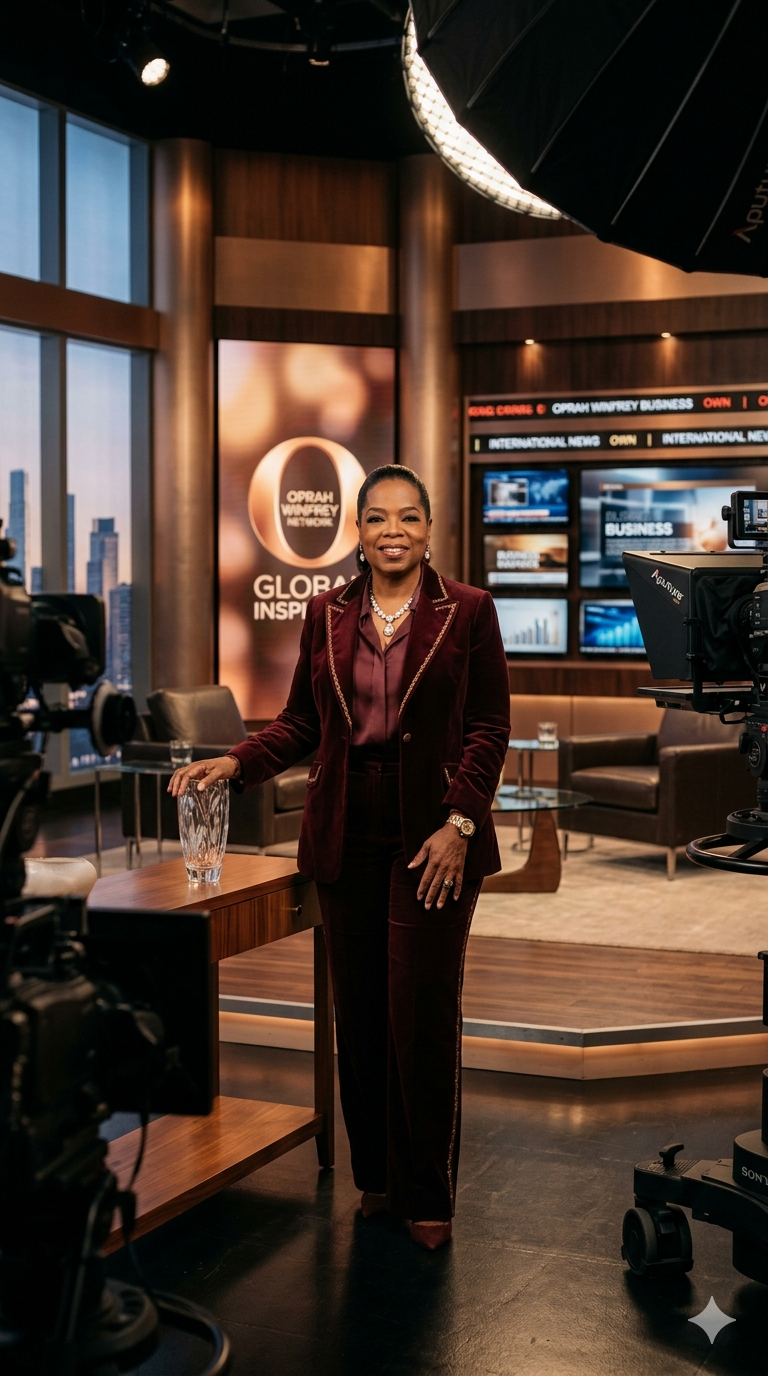
From local television host to global media icon, here’s how Oprah Winfrey transformed storytelling and personal branding into a long-lasting business empire.
Few public figures in modern media have built the level of influence achieved by Oprah Winfrey. Over the course of several decades, she transformed herself from a television host into one of the most powerful media personalities and entrepreneurs in the United States.
Her success story is often discussed not only because of financial achievement, but because of the way she built trust with audiences across multiple generations.
Long before the rise of social media creators and personal brands, Oprah Winfrey already understood something extremely important about media: people connect deeply with authenticity and emotional storytelling.
That understanding became the foundation of her empire.
In the early years of her career, Oprah worked in local television news before eventually transitioning into daytime talk shows. While the entertainment industry already had many television personalities at the time, Oprah’s communication style felt different to audiences.
Instead of appearing distant or overly scripted, she created conversations that felt emotional, personal, and human. Viewers often felt that she genuinely listened to people rather than simply interviewing them.
This emotional connection helped her stand out in a highly competitive industry.
As her popularity grew, Oprah Winfrey expanded beyond television hosting and began building a broader media business. Over time, she launched production companies, magazines, partnerships, digital projects, and eventually her own television network.
What made her strategy especially powerful was the consistency of her personal brand.
Across interviews, television appearances, book recommendations, and public speaking, Oprah maintained themes centered around growth, self-improvement, resilience, and personal transformation. Audiences came to associate her name with inspiration and trust.
In modern branding, that type of emotional consistency is incredibly valuable.
Another major reason behind Oprah’s influence is her ability to shape consumer behavior. Products, books, or ideas mentioned on her platform often experienced massive increases in popularity. This became widely known as the “Oprah Effect.”
Very few media personalities have ever achieved that level of audience trust.
Her influence also extended into publishing and education. Oprah’s book recommendations regularly introduced millions of readers to new authors and ideas. Rather than simply promoting entertainment, she positioned her platform around personal development and meaningful conversations.
This helped separate her brand from traditional celebrity culture.
Another interesting aspect of Oprah Winfrey’s career is her long-term thinking. Instead of focusing only on short-term popularity, she consistently invested in projects that strengthened her overall media ecosystem.
That approach helped her remain relevant even as the media industry changed dramatically through the internet and streaming era.
In many ways, Oprah Winfrey became an early example of what is now called creator-led media branding — where the individual personality becomes more powerful than the platform itself.
Today, many influencers and entrepreneurs use strategies similar to the ones Oprah developed years earlier:
- building audience trust
- creating emotional storytelling
- expanding into multiple business categories
- maintaining strong personal branding
Today, Oprah Winfrey represents far more than television success. She has become a symbol of modern media influence built through storytelling, emotional intelligence, audience trust, and long-term brand development.
Her journey also reflects how media itself has evolved. In today’s digital world, audiences increasingly connect with personalities rather than corporations alone.
Long before creator economy became a popular term, Oprah Winfrey had already shown how powerful a trusted personal brand could become.