
For years, my kitchen was a “linear system”: food came in, plastic went out, and organic waste ended up in a landfill. As a data enthusiast for FactsFigure, I decided to track my kitchen output for a month. I was shocked to find that I was throwing away nearly 15 lbs of packaging and food scraps every week.
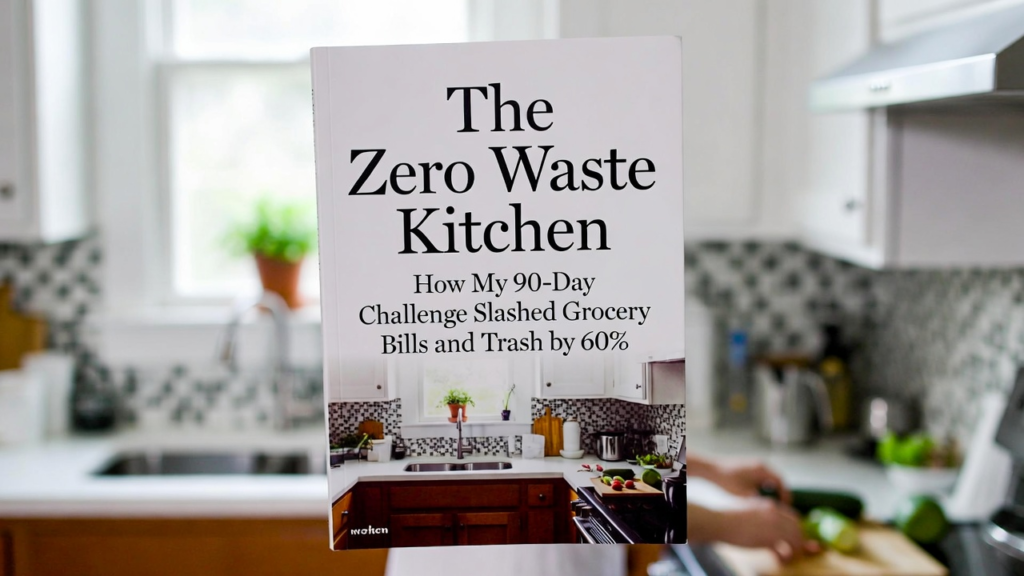
Worse than the environmental impact was the financial leakage. I was paying for packaging I didn’t need and throwing away food I had already paid for. I spent the last 90 days redesigning my kitchen habits. This wasn’t about being a “perfect environmentalist” (believe me, I still struggle with the occasional takeout container); it was about efficiency, cost-saving, and better data management.
Here is the personal story—mistakes and all—of how I transformed my kitchen into a high-efficiency zone, saving money and reducing my waste footprint by 60%.
1. The Bulk Buy Revolution: Lessons in “Jar-Weighing” Humility
I used to buy my grains, nuts, and spices in those convenient small plastic containers at the supermarket.
The Experience: I started bringing my own glass jars to the small bulk shop down my street. I’ll be honest: the first time I went, I forgot to “tare” (weigh) my jars first and felt like an amateur at the checkout. But that awkwardness vanished when I saw the price difference.
The Figure: A 16oz bag of branded organic quinoa cost me $7.99. Buying the exact same organic quinoa from the bulk bin cost me $4.50.
The Pro-Tip: Don’t be like me and bring 10 heavy glass jars in one tote bag—it’s a workout you didn’t ask for. Start with lightweight cloth bags for dry goods and transfer them to jars at home.
2. Silicon Stashers vs. Plastic Wrap: The Avocado Test
I used to go through two 250-foot rolls of plastic cling wrap every year. It’s a product designed to be used for 10 seconds and then exist for 500 years.
The Experience: I replaced all plastic wrap with beeswax wraps and silicone “Stasher” bags. I was skeptical about the seal, but I ran a test: I put half an avocado in a silicone bag and another half in plastic wrap. The one in the silicone bag stayed green for twice as long.
The Figure: I spent $45 on a set of silicone bags. While the initial cost stung, they are rated to last thousands of uses. By year two, this swap becomes “pure profit” for my household budget.
3. The “Stock Bag” in the Freezer: My First Bitter Failure
This is my favorite “FactsFigure” hack, though it had a rocky start.
The Experience: I started a “Stock Bag” in my freezer for vegetable peels and onion ends. My mistake: In the first batch, I threw in a bunch of bitter broccoli stems and cabbage cores. The resulting broth was so bitter it was almost undrinkable.
The Fix: I learned to stick to the “Holy Trinity”: carrots, onions, and celery scraps.
The Figure: I used to spend $4.00 per carton on organic vegetable broth. I now make 2 liters of superior broth every two weeks for zero dollars. That is a $104 annual saving from literally using “trash.”
4. Cast Iron: Escaping the “Non-Stick” Disposable Cycle
I got tired of buying a new $30 non-stick pan every two years because the Teflon coating would inevitably scratch and end up in our food.
The Experience: I switched to a seasoned Cast Iron skillet. I almost ruined it in the first week by soaking it in soapy water (a huge no-no!), but after re-seasoning it, it’s now the slickest pan I own.
The Figure: My cast iron pan cost $25 and will literally last 100 years. I have successfully exited the “planned obsolescence” cycle, saving me hundreds of dollars over my lifetime.
5. The Countertop Compost: Fighting the “Fear of Smell”
According to the World Wildlife Fund, food scraps in landfills produce methane—a gas 25 times more potent than CO2.
The Experience: I bought a small, odorless countertop compost bin. My biggest fear was fruit flies. The reality: As long as I empty it every two days into the main bin, there’s zero smell and zero bugs.
The Figure: My trash volume dropped by nearly 30% overnight. Because my bin was no longer filled with wet food scraps, I used 70% fewer trash bags, saving me an additional $25 a year.
6. The “Eat Me First” Box: My Grocery Bill Game-Changer
The average family throws away 25% of the food they buy. That is like walking out of a grocery store and dropping one of your four bags in the parking lot.
The Experience: I created a bright neon-colored box in the front of my fridge labeled “EAT ME FIRST.” Any produce or leftovers nearing their expiration date went in there.
The Result: No more “science experiments” growing in the back of my fridge.
The Figure: My weekly grocery bill dropped from $150 down to $125 because I stopped re-buying things I already had. That is $1,300 in annual savings.
My Zero Waste Kitchen: The Final 90-Day Audit
After three months, the figures for are undeniable:
Weekly Trash Output: Reduced from 15 lbs to 6 lbs.
Grocery Savings: An average of $25 per week.
Annual Financial Impact: Total savings of approximately $1,800.
⚠️ Disclaimer: Food Safety & Kitchen Hygiene
Composting: Ensure your countertop bin is emptied regularly. Never compost meat, dairy, or oily foods in a standard home bin as it can attract pests and create foul odors.
Canning & Storage: When using glass jars for bulk storage, ensure they are thoroughly cleaned and airtight to prevent pantry moths or spoilage.
Stock Making: Only use clean, non-rotten vegetable scraps. Avoid brassicas (broccoli, cabbage, Brussels sprouts) in stocks as they can turn the flavor bitter.
Medical Advice: These kitchen changes are based on my personal journey toward efficiency. Always prioritize food safety standards and consult professional nutritionists if you have specific dietary requirements.