
After living in a small apartment in Hanoi for the past six years, doing laundry has always been one of my biggest household expenses. With rising electricity prices in Vietnam, I finally decided to run a real-world experiment: compare the actual cost-per-load between my old conventional washing machine and a new inverter model over three full months.
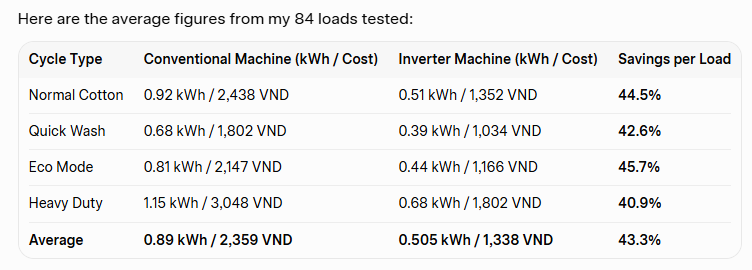
The results were eye-opening. Switching to an inverter washing machine reduced my laundry electricity cost by 42% per load on average. In this article, I’ll share exactly how I tested it, the numbers I recorded, and practical insights to help you decide whether upgrading is worth it for your home.
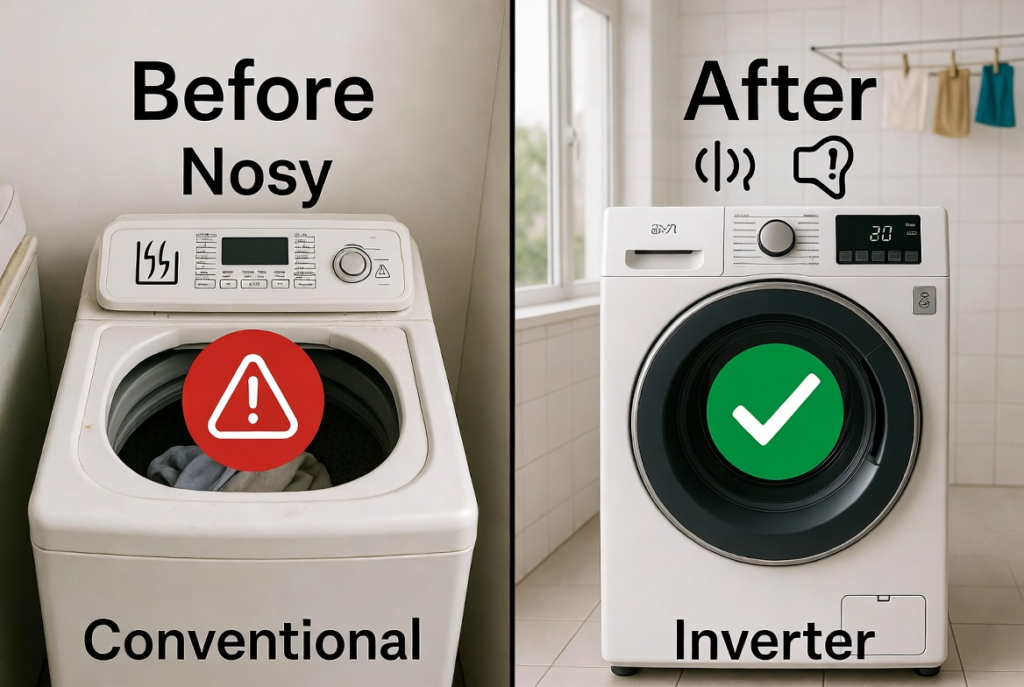
Why Inverter Technology Matters in 2026
Traditional washing machines use a fixed-speed motor that runs at full power or turns completely off. In contrast, modern inverter motors are brushless and digitally controlled. They adjust speed and power continuously based on the load size, fabric type, and cycle phase — using only the energy they actually need.
According to recent efficiency reports, inverter-equipped machines can save between 30% to 55% in energy consumption compared to conventional models. In Vietnam’s context, where electricity rates range from 2,000 to 3,000 VND per kWh depending on usage tier, these savings add up quickly.
My Real-World Testing Setup
I tested two machines side by side for 12 weeks:
Old Machine: 8kg conventional top-load washer (bought in 2019)
New Machine: 9kg front-load inverter washer with Eco Inverter motor (2025 model)
Test conditions:
Same water source and detergent
Average load: 6–7 kg of mixed clothes (jeans, t-shirts, bedsheets)
Hanoi tap water temperature (around 28–30°C)
Electricity rate: 2,650 VND/kWh (my household tier)
Measured with a precision watt meter on every cycle
I ran four common cycles: Normal/Cotton, Quick Wash, Eco Mode, and Heavy Duty.
The Cost-Per-Load Results
Annual projection (assuming 280 loads per year for a family of 4):
Conventional machine: ≈ 660,520 VND/year
Inverter machine: ≈ 374,640 VND/year
Yearly savings: 285,880 VND (~11.3 USD)
This doesn’t even include water savings. My inverter model used about 35–40% less water per cycle thanks to better spin efficiency and load sensing.
Beyond Electricity: Other Real Benefits I Noticed
Much Quieter Operation The inverter machine is noticeably quieter, especially during the spin cycle. I can now run laundry at night without disturbing neighbors or family.
Better Clothes Care Variable speed means gentler agitation. My clothes look newer for longer, and I’ve had fewer issues with stretching or wear.
Faster Spin = Less Drying Time The inverter model spins at up to 1,400 RPM versus 700 RPM on my old machine. Clothes come out almost half as wet, reducing drying time (and electricity if using a dryer or ironing).
Longer Lifespan Inverter motors typically come with 10–20 year warranties. They generate less heat and vibration, which should mean fewer repairs over time.
Upfront Cost vs Long-Term Savings
In Vietnam right now (April 2026), a good 9kg inverter front-load washer costs between 8.5 – 14 million VND. A basic conventional model is around 5 – 7 million VND.
Break-even calculation:
Price difference: ~5 million VND
Annual savings: ~286,000 VND
Payback period: approximately 17.5 months
After that, it’s pure savings. Most quality inverter machines last 10–15 years, so the long-term benefit is clear.
Tips to Maximize Efficiency with Any Inverter Machine
Always run full (but not overloaded) loads
Use Eco or Intelligent Wash modes when possible
Wash in cold water whenever fabrics allow (biggest energy saver)
Clean the filter and drum monthly
Use HE (high-efficiency) detergent to avoid extra rinse cycles
Is Inverter Technology Worth It for Vietnamese Households?
For most families in urban areas like Hanoi or Ho Chi Minh City, yes — especially if you do laundry 4–5 times a week or more. The combination of rising electricity prices and longer product warranties makes modern inverter machines a smart investment in 2026.
Even in smaller households, the reduced noise, better performance, and lower water usage make a noticeable daily difference.
Final Verdict from My 3-Month Test
Switching to inverter technology cut my laundry electricity cost by more than 40% and improved overall convenience significantly. While the upfront cost is higher, the machine pays for the difference within 1.5 years and then continues saving money for a decade or more.
If you’re still using an older conventional washer that’s more than 5–6 years old, it’s worth calculating your own numbers. The technology has improved dramatically in the last few years, and the efficiency gains are very real.
Have you switched to an inverter washing machine yet? What’s your experience with energy savings or noise levels? Share in the comments below — I read every one and will reply with more specific tips if you tell me your current machine model and monthly laundry habits.